Finding Hong Kong in Ipoh – The Story of Wong Fei Hung and Kong Fu Kopitiam
Discerning Hong Kongers sometimes see Malaysia through the lens of nostalgia – parts of it – especially Ipoh and Penang – remind them of the Hong Kong of a bygone era. I’ve heard stories of Chow Yun Fat visiting KL regularly back in the 80s (or was it the 70s?), while these days, you might spot Hong Kong actors like Simon Yam and Alfred Cheung on their low-profile visits to Ipoh.
And of course, Malaysians will quickly point out that Michelle Yeoh, who got her big break in Hong Kong martial arts movies, is from Ipoh.
So when I was first invited to visit Kong Fu Kopitiam by Ben Yap of IpohTreats.com, I have to admit I thought it was going to be a non-serious, glorified souvenir shop opportunistically attaching its branding to Ipoh’s links to Hong Kong kung fu cinema.
How wrong I was.
First, about the kung fu angle. Way before Michelle Yeoh came onto the scene, there was a particular martial artist and future silver screen legend by the name of Kwan Tak Hing who travelled as a teenager from China to Singapore and Malaysia, eventually settling in Ipoh for four years in the 1930s.
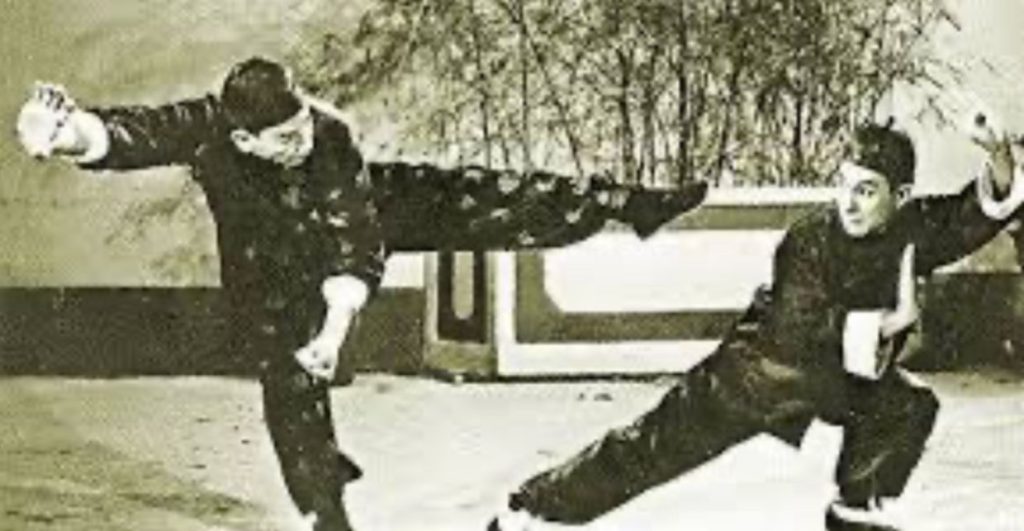
During that period, Kwan Tak Hing was deeply embedded in the Perak Ku Kong Chow Association, where he taught martial arts (yes, he was a bona fide kung fu master) and sold herbal tea and medicine – much like the Wong Fei Hung character he would make famous later on.
He moved back to Hong Kong right before World War II broke out, and because he had been active in the resistance against the Japanese, he had to escape Hong Kong and move to China.
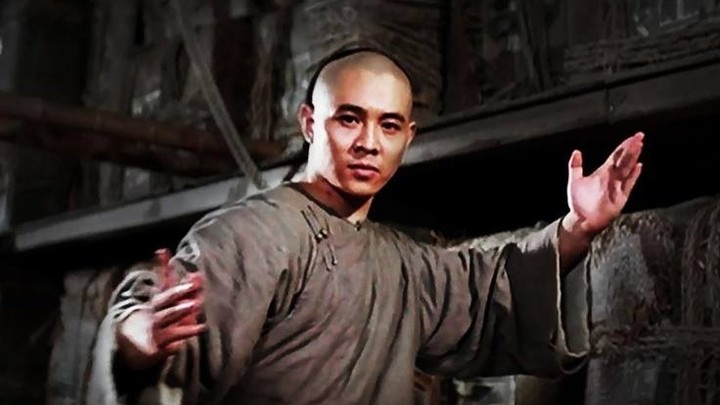
After the war ended, he returned to Hong Kong and made his name playing Wong Fei Hung in 77 movies, while retaining strong ties to Ipoh.
(If you don’t know who Wong Fei Hung is, he was a martial artist and medical practitioner in China, and many kung fu movies have him as the protagonist, kind of like Wyatt Earp or Robin Hood in Hollywood movies.)
So my next question was, what was the connection between Kwan Tak Hing and this coffee shop called Kong Fu Kopitiam?
Well, the upper level of the Perak Ku Kong Chow Association building where Kwan Tak Hing used to be based, is now a Memorial Hall in his honour.
Downstairs is Kong Fu Kopitiam.
Kong Fu Kopitiam is run by Ricky Soong, the Youth Wing Chief of the Perak Ku Kong Chow Association, alongside Joey Foo.
Ricky, by his own admission, had no experience in the restaurant industry before this, but he had a vision to memorialise the history of Kwan Tak Hing and his connection to the Ku Kong Chow Association for future generations, and he saw the kopitiam as the cultural gateway to the memorial hall.
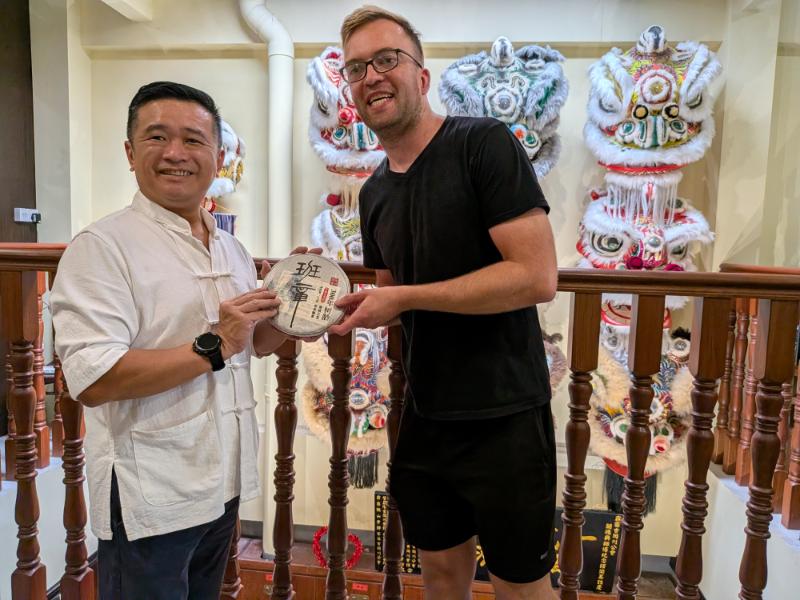
They brought a team of young trainees together, who spent months testing and adapting recipes for the menu. This brought back memories of my own team at my restaurant back in the day, when we would try different things and incorporate the successful experiments into our menu.
One of their most unique iterations at Kong Fu Kopitiam can be found in their version of asam laksa – they experimented with making their own salted large dried shrimp, fried them up, and garnished the laksa with it. This take on traditional asam laksa proved to be so popular it’s now a permanent fixture on their menu.
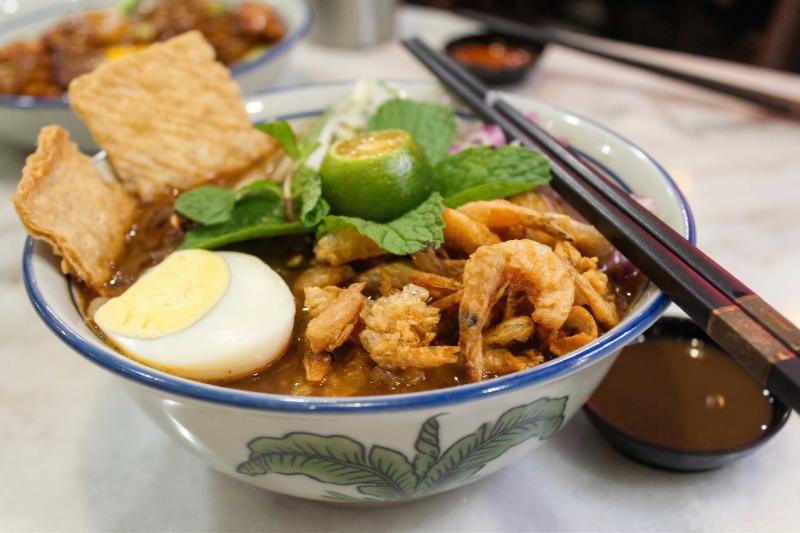
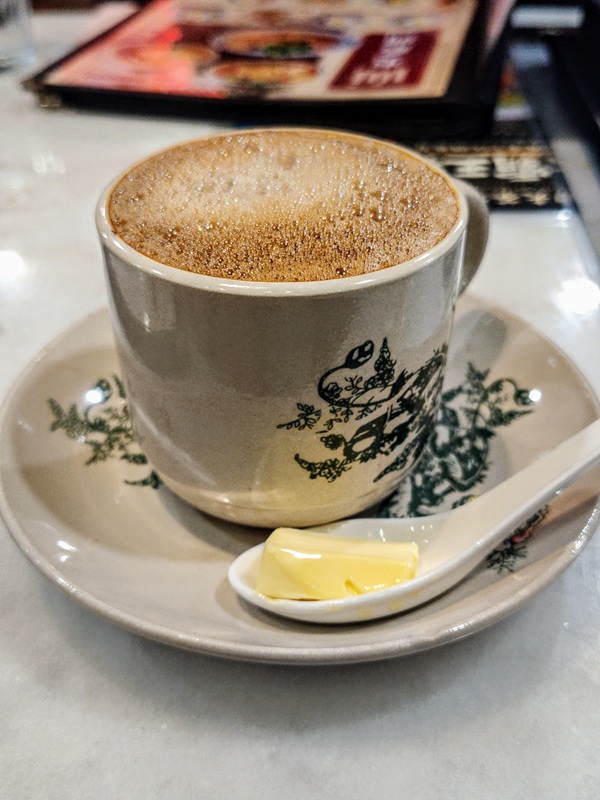
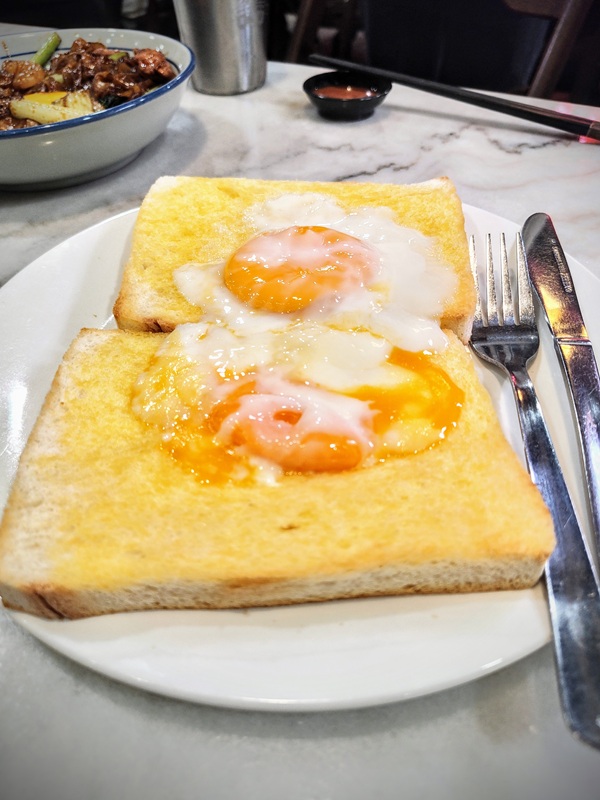
Apart from asam laksa, we also had Ipoh white coffee with butter – which makes the coffee extra creamy – roti goyang (soft eggs on toast), and yu kong hor (literally, moonlight fresh rice noodles).
We left the kopitiam with a deep appreciation for the history of the association and for what Ricky and his team have achieved in honoring Kwan Tak Hing’s contributions to Ipoh.
Bonus point for me, is that the food is delicious as well as pork-free, so I am very much looking forward to visiting again when we’re next in Ipoh, to try the other dishes on the menu.
Kong Fu Kopitiam
39, Jalan Panglima, 30000 Ipoh, Perak, Malaysia
Phone: +60 17-733 1928
Hours: 8.30am – 4.30pm; closed Wednesdays
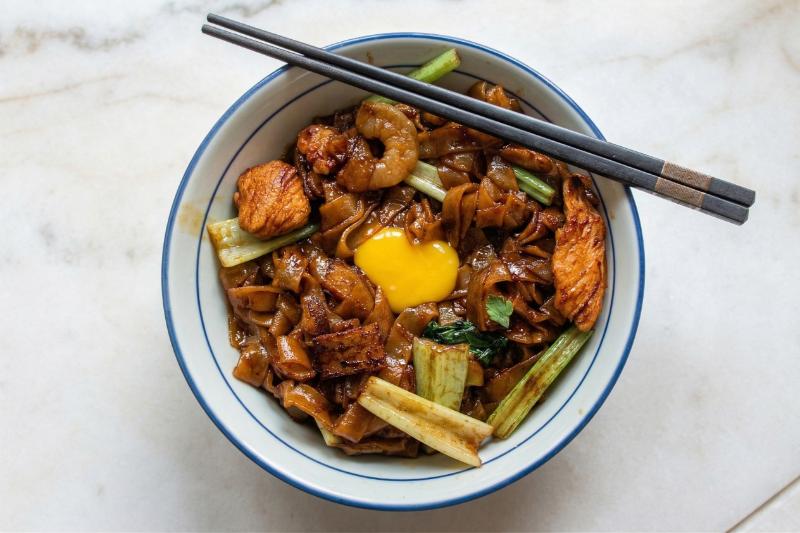
YU KONG HOR (MOONLIGHT FRESH RICE NOODLES)
INGREDIENTS:
250 g fresh hor fun (flat wide-cut rice noodles), loosened
4 prawns, peeled and deveined
4 slices fish cake
2 pieces squid, cleaned and cut into rings
2 slices chicken (about 40–50 g), thinly sliced
1 TBSP minced garlic
A small handful Chinese greens (eg. choy sum or baby bok choy), 4–5 cm
lengths
2 TBSP oil (or chicken fat if you want extra depth)
Thickening
1 TBSP tapioca starch
2 TBSP cold water
Seasoning
2 TBSP thick soya sauce (aka cooking caramel)
1 TBSP light soy sauce
200 ml chicken stock or water
1⁄2 TBSP sugar
1 tsp chicken stock granules
Dash of white pepper
1 fresh egg
METHOD:
- Mix tapioca starch with cold water; set aside.
- Loosen hor fun gently so strands separate; if clumping, toss with 1 tsp oil.
- Heat a wok or heavy saucepan until smoking, then add about 2 TBSP oil
and bring to smoking point. - Add minced garlic, stir-fry briefly until fragrant. Add hor fun and fry briefly over high heat to pick up a bit of char, about
30–45 seconds. - Add prawns, fish cake, squid and chicken; cook a further minute, tossing
so they colour lightly but do not overcook. - Pour in all the seasoning ingredients (thick caramel sauce, light soy, stock
or water, sugar, stock granules, pepper). - Allow to simmer so noodles absorb flavour and the liquid reduces slightly;
taste and adjust salt/sugar/soy as needed. - Add the Chinese greens and cook a further 30 seconds.
- Stir the tapioca starch mixture again, drizzle into the wok while
simmering, and cook until the sauce thickens and clings to the hor fun,
leaving just a shallow glossy, dark gravy. - Transfer noodles and gravy into a deep plate or bowl, piling them slightly
high in the centre, with some sauce visible around. - Immediately crack 1 raw egg on top, right in the centre – do not stir.
The recipe for this along with all others from our Perak trip can be found in Issue # 25 of our Truly Malaysian by MOMC digital magazine, which you can download for free here, with two different cover options:
Cover 1 (Kopitiam coffee cup) – Click to View or Download
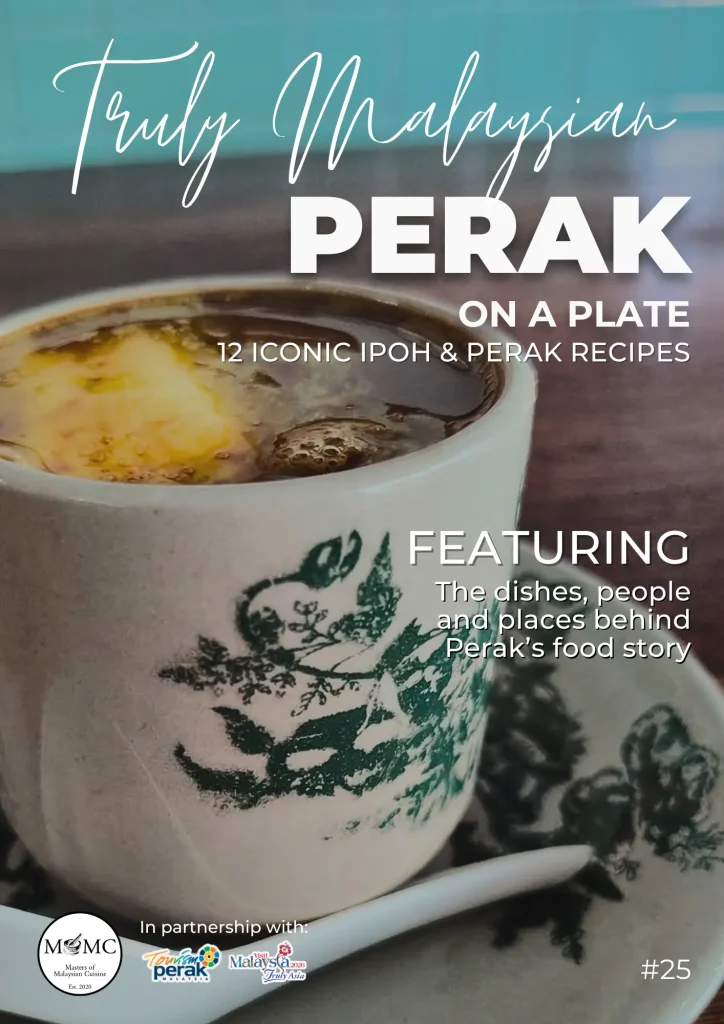
Cover 2 (Ipoh Kai Si Hor Fun noodles) – Clicke to View or Download